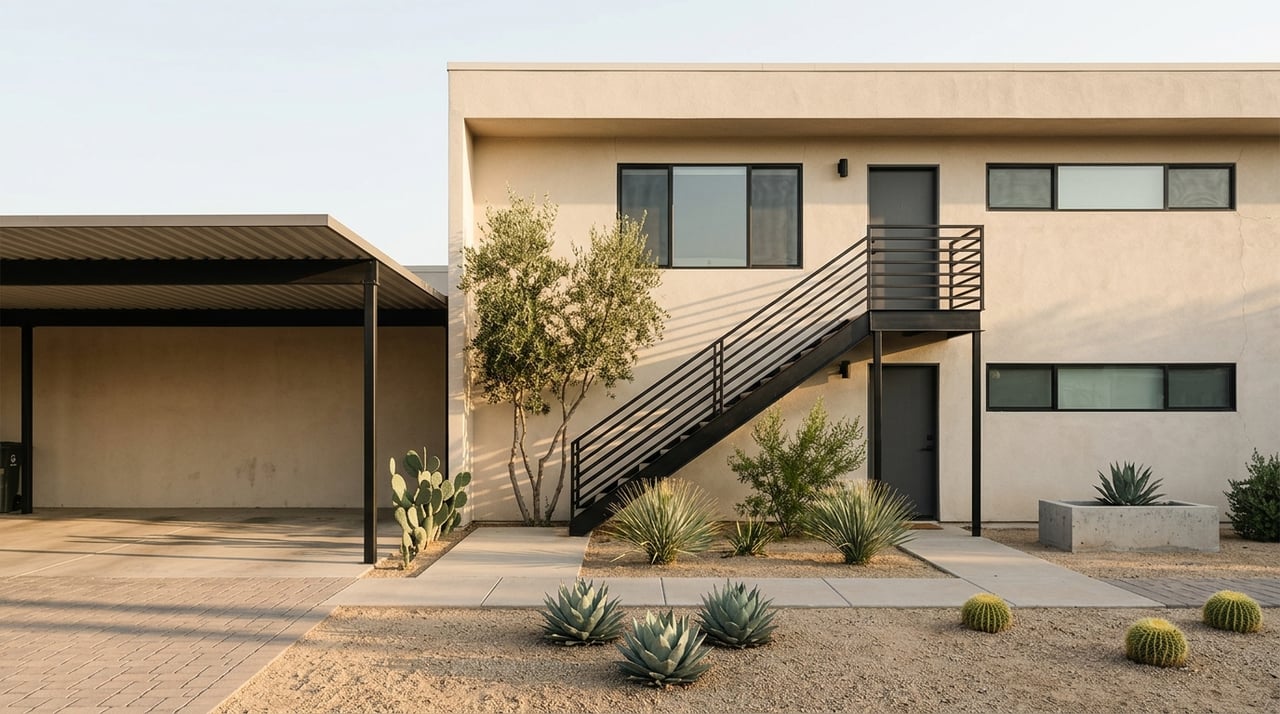
If you want to build a small multifamily portfolio in Mesa, the good news is that you are looking in a market with real scale, a meaningful base of duplex and fourplex-style housing, and evolving rules that increasingly recognize this property type. The challenge is that Mesa is not a market where loose assumptions or generic rent averages will carry your deal. You need a practical plan, conservative numbers, and strong local guidance. Let’s dive in.
Why Mesa fits small multifamily
Mesa is one of Arizona’s largest cities, with an estimated population of 517,151 as of July 1, 2024, according to the U.S. Census Bureau’s Mesa profile. The same source shows an owner-occupied housing rate of 64.4% and a median gross rent of $1,620 for the 2020-2024 period, which helps frame the city as a large, active housing market rather than a niche pocket.
Mesa also has an existing base of small multifamily housing. The city’s 2025-2029 Consolidated Plan reports that 2-4 unit buildings make up 5.6% of Mesa’s housing stock. That matters if your goal is to build a portfolio one property at a time, because you are not trying to force a product type into a market that has never supported it.
There is also a planning backdrop worth watching. The City of Mesa says it adopted middle-housing text amendments on December 8, 2025, allowing duplexes, triplexes, fourplexes, and townhomes on certain parcels zoned for single-family residential within 1 mile of downtown and on up to 20% of a new residential development. For investors, that signals that small multifamily is becoming more formally integrated into local land-use policy.
Start with realistic market expectations
Mesa can make sense for a small multifamily investor, but this is not the time to underwrite aggressive rent growth. HUD’s Phoenix-Mesa-Chandler Comprehensive Housing Market Analysis reports an apartment vacancy rate of 11.3% in the fourth quarter of 2024, with average rent at $1,572, down 1% year over year. That soft apartment backdrop should push you toward discipline, not optimism.
Rent data also varies widely by source and method. The research report notes that Zillow and Apartments.com show very different citywide averages for Mesa rentals. The practical lesson is simple: use property-specific rent comps, not one headline number, when you evaluate a duplex or fourplex.
That approach matters even more if you plan to renovate. In a softer rental environment, the spread between in-place rent and achievable rent needs to be real, supportable, and based on comparable units with similar layouts, condition, and amenities.
Build around Mesa’s most relevant unit mix
If you are deciding what kind of small multifamily asset to target, Mesa’s renter mix offers a useful guide. The city’s Consolidated Plan shows that 40.7% of renter-occupied units are 2-bedroom units, compared with 23.0% one-bedroom and 30.2% three-bedroom or larger.
That does not mean every winning property in Mesa must be a 2-bedroom layout. It does mean that 2-bedroom units appear to be the clearest underwriting baseline for this market. If you are comparing several duplexes or fourplexes, unit mix should be part of the conversation, not an afterthought.
In practical terms, a simple, functional two-bedroom floor plan may appeal to a broad segment of renters. For a small portfolio, that can support easier leasing and more predictable turnover than betting on a niche layout without strong comp support.
Focus on function before finishes
Mesa small multifamily tends to reward practical upgrades. Based on the city’s renter profile and recurring features shown in current market examples in the research report, the strongest positioning often comes from solving everyday renter needs first.
That means features like:
- Clear utility billing or separate metering
- In-unit laundry hookups
- Assigned or covered parking
- Private entrances
- Fenced outdoor space
- Durable flooring and low-maintenance finishes
In other words, you do not need to over-design a duplex to make it competitive. In many Mesa properties, parking, privacy, laundry, and systems reliability may matter as much as a trendy kitchen finish.
This aligns well with the Lowery Premier Team approach. A construction-minded evaluation can help you distinguish between upgrades that photograph well and upgrades that actually improve rentability, reduce maintenance friction, and support long-term performance.
Underwrite renovations conservatively
If your plan involves value-add, start with systems. Mesa’s Emergency Rehabilitation Program highlights the kinds of issues that commonly drive serious habitability concerns in older housing: AC or heater repair, roof repair, water heater replacement, severe electrical issues, severe plumbing issues, and accessibility-related work.
For investors, that is a useful reminder that the biggest line items in a rehab budget are often not cosmetic. Before you get excited about flooring and paint, ask whether the roof, HVAC, plumbing, and electrical systems are ready for the next phase of ownership.
A conservative Mesa value-add plan should usually include:
- A realistic repair budget for major systems
- Turnover time that reflects actual scope
- Reserves for unexpected issues
- Rent projections based on nearby comparable units
- A clear distinction between must-do repairs and optional upgrades
HUD’s latest metro data supports that caution. In a softer rental environment, you are better off protecting your downside than building a deal around best-case rent growth assumptions.
Pay close attention to older stock
Mesa’s housing stock spans several decades, and age matters. The city’s Consolidated Plan notes that nearly 67% of the housing stock was built from 1980 onward, while 29% of owner-occupied units and 33% of renter-occupied units were built before 1980. The same report says the highest concentrations of pre-1980 homes are in the west and southwest parts of Mesa, and multifamily properties of all sizes tend to cluster in the western portion of the city.
That does not make older west Mesa properties bad opportunities. It simply means older duplexes and fourplexes often require deeper due diligence on deferred maintenance, compliance, and replacement timelines.
Pre-1978 properties require even more care. The EPA explains that renovation, repair, or painting in pre-1978 buildings can create dangerous lead dust, and paid work in pre-1978 rentals must be performed by a Lead-Safe Certified Firm using a certified renovator. If you are buying an older fourplex, lead-safe compliance should be part of your planning from day one.
Compare older and newer opportunities
When you build a Mesa portfolio, you will likely face a common tradeoff: older properties may offer more visible upside, while newer properties may reduce rehab risk but come at a higher basis.
Here is a simple way to think about it:
| Property type | Potential advantage | Key caution |
|---|---|---|
| Older duplex or fourplex | More value-add potential and room to improve operations | Higher chance of deferred maintenance, system replacements, and lead-safe renovation requirements |
| Newer small multifamily | Lower immediate rehab risk and potentially fewer major system issues | Higher acquisition cost may compress cash flow or limit upside |
Neither path is automatically better. The right choice depends on your capital, risk tolerance, renovation capacity, and time horizon.
Think about stabilization, not just acquisition
Buying the property is only the first step. A small multifamily portfolio gets stronger when each asset has a clear stabilization plan.
In Mesa, that means asking practical questions early:
- Is the current rent below market for the unit’s actual condition?
- Which upgrades are most likely to improve leasing without overspending?
- How quickly can you complete unit turns?
- Does the property have utility, parking, or layout issues that affect rentability?
- Are your reserve assumptions strong enough for an older asset?
If you are considering voucher tenants, Mesa’s Housing Choice Voucher landlord guidance says the unit must be affordable for the family, rent reasonable compared with similar units, and able to pass Housing Quality Standards inspections before assistance begins. For some properties, that can be part of a sound stabilization strategy if the unit condition, rent level, and management plan align with program requirements.
Build the right local team
Small multifamily investing in Mesa is not just about finding a deal. It is also about having the right people around you once you are in contract and after you close.
Based on the risks and requirements outlined in the research, a strong local team often includes:
- A lender comfortable with small-balance multifamily underwriting
- A CPA or financial professional to test cash-flow and tax assumptions
- A property manager familiar with Mesa leasing realities and inspection standards
- Licensed contractors for HVAC, roofing, plumbing, and electrical work
- Lead-safe renovation professionals when older stock requires it
This is where local, construction-informed guidance can make a real difference. If you are evaluating several Mesa duplexes or fourplexes, it helps to work with someone who can look beyond surface finishes and identify the improvements that may actually affect returns, inspections, and long-term maintenance.
A practical strategy for a Mesa portfolio
If you are just starting out, Mesa may be best approached as a market for steady portfolio building, not fast speculation. The strongest opportunities are likely to come from buying with discipline, selecting a sensible unit mix, budgeting renovations around systems first, and making leasing decisions based on real comps rather than broad averages.
That may not be the flashiest strategy, but it is often the one that holds up best over time. In a market with mixed rent signals and aging inventory in some areas, careful underwriting is a competitive advantage.
If you want help identifying Mesa duplexes or fourplexes, pressure-testing renovation scope, or comparing the tradeoffs between older and newer small multifamily opportunities, the Lowery Premier Team brings both transaction guidance and practical construction insight to the process.
FAQs
What makes Mesa a workable market for a small multifamily portfolio?
- Mesa is a large housing market with existing 2-4 unit inventory, and city planning now more clearly recognizes duplexes, triplexes, and fourplexes in certain areas.
What unit type is most relevant for Mesa duplexes and fourplexes?
- Mesa renter data suggests 2-bedroom units are the strongest baseline for underwriting because they make up the largest share of renter-occupied units.
What renovation items matter most for older Mesa multifamily properties?
- Major systems such as HVAC, roofing, plumbing, electrical, and water heaters should usually come before cosmetic upgrades when you build a rehab budget.
What should investors know about pre-1978 Mesa rental properties?
- Renovation work in pre-1978 rentals may trigger lead-safe requirements, so you should plan for certified contractors and added compliance during rehab.
What should you look for when comparing Mesa duplex and fourplex deals?
- Focus on unit mix, in-place versus achievable rent, system condition, parking, laundry, utility setup, and realistic reserves rather than relying on citywide rent averages alone.
What kind of team helps when buying small multifamily in Mesa?
- A lender, financial professional, property manager, and licensed contractors with local experience can help you underwrite more accurately and manage risk after closing.